Sunday, April 8, 2012

10) Daegu, South Korea

Gatbawi Buddha Daegu


Daegu, officially known as Daegu Metropolitan City, is one of the largest cities in South Korea, and it is the capital of Gyeongsangbuk-do province, though it is not legally part of that province. Daegu and its surrounding area provide an admirable variety of leisure, entertainment and sporting amenities within easy reach. Daily half-day or one day tour events including English speaking guides, such as visiting museums, Buddhist temples, kings' tomb, old castle, folk village, zoo, city tour etc., are offered during the Congress. One of the must- see destinations of Daegu is Gatbawi Buddha, Daegu. Traditionally Buddhism was very strong in Daegu, and Confucianism was also popular in Daegu, with a large academy based in the city.


Gatbawi Buddha, the Buddha of Medicine, situated at Gwanbong, the southern peak of Palgongsan mountain. Carved in the 9th century, the statue Gatbawi Buddha, Daegu has become one of the major tourist attractions of Daegu and definitely, it is possibly the hardest to reach. The height of the place, where Gatbawi Buddha is situated, is more than 800 meters and takes almost an hour to climb. "Gatbawi" means "hat rock".


Gatbawi Buddha, Daegu is famous for granting wishes, and it has attracted many visitors to Mt. Palgongsan from other regions of Korea. There is a proverb that Gatbawi helps people make only one wish come true. The original name of Gatbawi Buddha, Daegu is Gwanbong Buddha as it is located at the summit of the Gwanbong peak (850 meters) on Mt. Palgongsan. The name of Gatbawi Buddha is a more famous than Gwanbong Buddha all over the nation as the Buddha has a gat, a Korean hat, on top. 


The hat is a flat 15?-thick stone slab. Gatbawi Buddha, Daegu is also famous for its attractive tracking course. Gatbawi Buddha, Daegu is almost a 4m tall sitting stone Buddha, and Its official name is Gwanbong Seokjoyeoraejwasang (Gwanbong sitting stone Buddha). The stiff lips of his closed mouth and his stout body demonstrate the feeling of impressive mercy. Gatbawi Buddha, Daegu is a representative work of art from the Unified Silla Kingdom, and this statue is designated as the Treasure Number 431.


Daegu National Museum


Daegu National Museum was built to preserve and exhibit the unique cultural heritage of Daegu and Gyeongsangbuk-do province. It is a neat brick building with two basement floors. There are three exhibit halls, a special exhibit hall, experiment study room, audiovisual studio and library. At the Archeology Gallery you can see relics ranging from the Neolithic Era to the Three Kingdoms Period chronologically. At the Art History Gallery you can see and learn about the Buddhist culture of Gyeongsangbuk-do province. 


Here you can see Buddhist sculptures, Buddha statues and Buddhist crafts. The Goryeo celadon and Buncheong ware are also displayed here. At the Traditional Folk Life Gallery you can learn about the Seonbi culture and the beliefs and rituals of the Yeongnam area, and see traditional Korean houses. You can also enjoy the Outdoor Gallery where a five-storied stone pagoda stands. There are other facilities where visitors can participate in museum activities. 


You can try traditional dyeing, explore the traditional herbs and learn about agricultural plants. Do not miss going here because this is where you can learn about traditional herbs used for medicine, plants and grains. Resting in the natural surroundings at the wildflower and plant walkway or the Ecology Valley can be very relaxing. 


Donghwasa Temple


Donghwasa Temple (동화사) is located on the south side of Mt. Palgongsan Mountain, about 22km northeast of Daegu. It was built by monk Geuk-Dal in the 15th year of the Silla King SoJi’s reign (493). The original name of the temple was Yugasa, but Simjiwangsa rebuilt the temple under King HeungDeok (reign 826~836) and named it Donghwasa. It means even during the winter season, the paulownia tree still blooms, and the present temple was last rebuilt in 1732. 

When you turn the corner, the first thing that catches your eye is the Seolbeopjeon Building. To the left of Seolbeopjeon is Daeungjeon, the main temple, and to the right of the building leads to the Geumgang Stairs. If you turn left in the direction of Daeungjeon you will see Bongseoru, aptly named to signify a Bonghwang (phoenix) with its tail pointed downward. Past Bongseoru are stairs that are typical of the ones leading into Daeungjeon, called "Nugak Stairs". On either side of the stairs are railings in the shape of a dragon, and in the middle of the stairs, there is a round stone marble that resembles a Yeouiju, a ball often associated with dragons. 

Donghwasa’s Daeungjeon is segmented into 3 sections at the front and side, and its natural looking pillars are one of its main attractions. It includes the statues of Seokgamonibul, Amitabul, and Yaksayeoraebul inside. If you come down the stone stairs beside Bongseoru and walk along the cement road for a while, you will come to the huge Seokjoyaksa Yeoraebul. Created as a prayer for reunification, this large Buddha statue is 17m high. The stone tower, stone light, the lion statue, and the lotus flower that decorate the Buddha statue are all very large in size. Behind the statue are also stones arranged in a circular form resembling a beautiful scroll painting. These are world-class size stone artifacts. 


Sunday, April 1, 2012

9) Seoul, South Korea

Namsan (South Mountain) and Seoul Tower 

In a city as huge as Seoul, finding your bearings can be a challenge. But on this week’s show we’ll take a look at a Seoul icon that helps city residents secure their sense of place. When King Taejo (태조왕) moved Korea’s capital to present-day Seoul in 1394, he protected it with 18 kilometers of fortress walls that connected four mountaintops. Namsan (남산), which means “South Mountain,” formed the city’s southern border.

Of course, long ago Seoul spilled beyond those original walls. So what was the city’s southern limit is now its heart. And from various points throughout the city, N Seoul Tower can be seen rising atop Nam Mountain. 

In 1984, Namsan Park (남산공원) was established. At nearly three million square meters, the park is one of Seoul City’s largest green spaces. And despite being smack dab in the center of one of the world’s biggest cities, the park is home to over 600 plant and animal species. 


Each year, 8.4 million people visit the park, which translates to some 30,000 a day in the high season. In addition to enjoying well-maintained jogging paths, the park includes a library, a botanical garden and a swimming pool. At the park’s northeast side there’s the Namsangol Hanok Village (남산골한옥마을). Built to resemble a Korean folk village, free traditional wedding ceremonies and cultural performances can be enjoyed there in the summer and fall. 

No doubt, the park’s most popular attraction is N Seoul Tower. Built in 1969 and opened to the public 11 years later, the communication tower is about 237 meters tall, and tops out at a half-kilometer above sea level. To reach the tower, South Korea’s first cable car whisks people from the outskirts of the Myeongdong retail district to the mountaintop. 


Gyeongbokgung Palace

Built in 1395, Gyeongbokgung Palace is also commonly referred to as the “Northern Palace” because it is the furthest north when compared to the neighboring palaces of Changdeokgung (Eastern Palace) and Gyeongheegung (Western Palace). Gyeongbokgung Palace is arguably the most beautiful and remains the grandest of all five palaces. 

The premises were destroyed by fire at the time of Japanese occupation from 1592-1598. However, all of the palace's 7,700 rooms were later restored under the leadership of Heungseondaewongun during the reign of King Gojong (1852~1919) . 


Remarkably, the most representative edifices of the Joseon Dynasty, Gyeonghoe-ru Pavilion and Hyangwonjeong Pond are still relatively in tact. Woldae and the sculptures of Geunjeongjeon (The Royal Audience Chamber) represent past sculpture of contemporary art. 

The National Palace Museum of Korea is located south of Heungnyemun Gate, and the National Folk Museum is located east within Hyangwonjeong.


Lotte World


This huge complex includes an amusement park, an ice-skating rink, a cinema multiplex, department store, folk museum, shopping mall, hotel, restaurants and more. Kids and adults alike love Lotte World, and couples can arrange to meet at Lotte’s own Trevi Fountain. Visit at the weekend to see a free traditional show at nearby Seoul Norimadang at 3pm. 

Lotte World Adventure & Magic Island is a mainly indoor Korean version of Disneyland, complete with ‘flying’ balloons, 3D films, laser and music shows, screen rides, fantasy parades and thrill rides that go down very fast or round and round and up and down very fast. The scarier the ride, the longer the queue on busy days. The outdoor Magic Island is in the middle of Seokchon Lake, and that part may close in bad weather. 


The carousel has been popular with dating couples since it starred in the TV drama series Stairway to Heaven. Theindoor ice-skating rink is in a fairyland setting, but watch out for tiny speedsters training to become future Winter Olympic champions. Nearby is a bowling alley next to a pool hall. Or why not don a flak jacket and steel helmet and fire off some rounds in the shooting range ? The Folk Museum uses imagin­ative techniques like dioramas, scale models and moving waxworks to bring scenes from Korean history to life. 


The price is included in the day-pass ticket for Lotte World Adventure & Magic Island. Outside is the Charlotte Theatre, which presents big musical shows such as Cats. There are the usual shops, fast-food outlets and restaurants including Pizza Hut, Marché and Sizzlers. The Lotte Department Store has upmarket fashions but reasonably priced food in its basement food court, most of it freshly made on the spot. Choose from nine real fruit juices, and then decide between the lobster, a-meal-in-a-pumpkin or asking an Indian chef to toss a savoury, paper-thin roti onto the hotplate.


Tuesday, March 27, 2012

8) Edmonton, Canada

Edmonton Valley Zoo

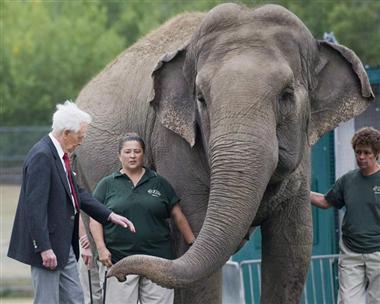
Nestled on the banks of the North Saskatchewan River, the Edmonton Valley Zoo is a small and intimate zoo that provides authentic and engaging animal experiences.


Edmonton City Council recently approved $50 million in capital funding to support the important work of the zoo. The funding will allow the City to move forward and begin to create a vibrant new zoo with improved habitats, better opportunities for guests to closely interact with animals, and state-of the-art research and education facilities


The Edmonton Valley Zoo is home to over 350 animals, with a full range of species from different climates and habitats — all here for you to discover, learn about and appreciate.


Fort Edmonton Park


One of Edmonton's premier attractions, the Park represents four distinct time periods, exploring Edmonton's development from a fur trade post in the vast Northwest, to a booming metropolitan centre after the First World War. The park features over 75 structures many of which are the originals. Costumed interpreters operate the site and live the way of the past. Exploring each building, each room, and talking to the 'inhabitants' makes for an extremely enjoyable recreational visit. This attraction can be viewed in a few 
hours or may take many return visits to appreciate the sense of the past. 

Free steam engine train rides from the park entrance to the Fort as well as free streetcar rides down 1905 and 1920 streets. Period rides such as wagon, stagecoach, pony and buggy are a big hit with everyone on 1885 stret and can be enjoyed for a nominal fee. 

The park is open to the public daily from the May long week-end to Labor Day and is located on the south bank of the North Saskatchewan River just below the Quesnell Bridge in west Edmonton. 


Saturday, March 24, 2012

7) Victoria, Canada


Craigdarroch Castle 


Craigdarroch Castle in Victoria is an imposing Victorian mansion completed in 1890 for Robert and Joan Dunsmuir, Scottish immigrants who made their fortune from Vancouver Island coal.

Robert Dunsmuir died in 1889, just months before his majestic Craigdarroch Castle was completed. Although he arrived on Vancouver Island a poor coal miner, he built an empire and became the wealthiest and most influential man in British Columbia.


The fortune Dunsmuir amassed is reflected in every piece of the finest wood, stone and glass meticulously tooled to create Craigdarroch Castle, now a national historic museum featuring an extensive collection of stained and lead glass windows, magnificent woodwork, Victorian furnishings and decorative arts.

To tour the Castle, you can park on the Castle lot or on the street where indicated. You enter through the old coach entrance, pay your admission fee, clean your shoes and are then provided with a floor map, family history and introduction as to how to proceed. Tours are self-guided, so you can stop where you want. It should take you 45 minutes to an hour to tour through the Castle.


It is an easy climb up the 87 stairs, stopping on all of the four floors to tour the various rooms and then to the Tower for a panoramic view of Victoria, the Strait of Juan de Fuca and the snow capped Olympic Mountains. There are volunteer docents (information providers) available throughout the Castle.


Butchart Gardens


A family business from its inception, the 50 acre gardens are elegant, with paved paths, winding meadows and gardens of blossoming flowers. 


The trails lead to ponds and fountains, wooden bridges and rumbling creeks lined with graceful trees both local and exotic. Many paths loop in intriguing circles and spirals, leading to viewing benches, shelters and grassy nooks. Butchart Gardens' most famous highlights include the Red Gardens and the fabulous Chinese Gardens.


The Gardens has established an international reputation for its year round display of flowering plants.


Royal British Columbia Museum


The Royal British Columbia Museumis a visual look into the regression, depression and progressive times of the west coast wildlife and the trials of man's survival in BC's rugged wilderness environments.

BC pioneers, towns and forests come alive in each Royal BC Museum diorama because the sounds, smells and sights come alive when walking through many of the museum's three-dimensional permanent display reproductions like the First Nations People Gallery, the Natural History Gallery and the Modern Era Gallery. Also the Royal BC Museum tells time-line sensitive stories including the cleansing and extinction of many species during the Ice Age, up to and including, the development of the human race in British Columbia.


The Royal British Columbia Museum First Nations Gallery is a world class exhibit with interactive displays, artifacts and a long house. A favourite is the First Nations ceremonial masks on display. The masks are mostly from the Kwakwaka'wakw era. The Crooked Peak of Heaven and Supernatural Raven masks were said to be the helpers of the Great Cannibal Spirit. Jonathan Hunt House, on the other hand, is sacred and was constructed in honor of the late Chief Kwakwabalasami of Fort Rupert.


The Royal British Columbia Museum is a great educational tour indoors discovering and understanding the past of our people, forests, oceans, wildlife and of our west coast communities in BC, Canada. The exhibits are world class and the location is central. A great place for families and children to spend some quality time together learning, looking and listening. 


Dominion Astrophysical Observatory


The three telescopes that are located up here on Observatory Hill are the 1.8-metre optical/near-infrared Plaskett Telescope, named after Observatory founder John Stanley Plaskett, the 1.2-metre telescope with its McKellar spectrograph (named for the Canadian astronomer who identified hydrocarbons in interstellar space in the 1930s), and a 40-cm telescope.

The Plaskett and the 1.2 Metre telescopes are used every clear night for research which amounts to about 200 times a year. Of those 2, the most interesting is the Plaskett. The Plaskett was built for $250,000 dollars (About $4 Million in todays dollars) and was huge undertaking for a country that was just over 50 years old. It initially put Canada on the map in the Astrophysical sciences and has continually contributed to the understanding of Space over its 90 years of use.

During the summer, tours of the Plaskett are available through the nearby 'Centre of the Universe' museum for a fee. On Saturday nights, a program is presented (again, for a fee) that will introduce you to the stars and on occasion, will have the public view objects with the Plaskett.


Sunday, March 18, 2012

6) Sopot, Poland

Pier


Longest wooden pier in Europe

Whenever we wanted to leaver earlier classes, weather was nice and it is not summer (way too many people) we used to go to the pier. During good weather you can see Hel (peninsula), have a boat trip there or just relax with some drinks.
At the moment there are couple of restaurants and smaller shops so you can always eat something.

Unless you want to pay for entering the pier you should visit in the evening in summer or at any other season. Staying there in winter (just like any sitting in the beach in the winter in Poland) is something unforgettable.


Monte Cassino Street

It's a must if you are in Tricity (Gdansk, Sopot, gdynia) in Poland. You should start near the Church and Railway Station and go down towards wooden pier and the beach. This is heart  and main street of Sopot with lots of restaurants and pubs where you can hide. One of my favourites is "Crooked House" ;) which original architecture makes whole place less serious.


It is in fact a beautiful street with many shops and restaurants to visit. It is very popular and one can no longer enjoy its beauty and it is never quiet there. You might like the skating ring at the end of it in the winder time. 


Sunday, March 11, 2012

5) Poznan, Poland

The Raczyński Library

Housed in a magnificent neoclassical building the Library dominates Plac Wolności (Liberty Square). The latter, Poznań's largest square, was set out at the turn of the 18th century and bore the name Wilhelm Square, though during the days of the Duchy of Warsaw (1807-1813) it was renamed Napoleon Square. It acquired its present name in 1919.


The Library was founded in 1829 by Count Edward Raczyński, it was the first public library in Poland. Raczyński, who donated to it his family library collection, took a very personal interest in the library, taking care of all details related to its coming into being. When it opened its collection numbered 13,000 books. In 1945, during the Battle of Poznań, the Library and its collection of 186 thousand volumes was burnt. Only manuscipts and old prints which had been evacuated to the Raczynski estate in Obrzyck survived. Rebuilt, and now housing a collection of 1.6 million volumes, the Library is expanding into a new addition being built at the back of the original structure.


In front of the library stand the Well of Hygeia, the Greek Goddess of health. The mid 19th century sculpture was funded by Edward Raczyński to commemorate the installation of the city's water supply system. The visage of the goddess resembles that of Count Raczyński's wife, Constance.


Market Square


There are many reasons to visit Poznan, the city that lies almost in the center of Poland, half way between Berlin and Warsaw - the capital of Poland.


Once you are in Poznan you will be very surprised by all its magic that it has to offer. When you visit its Old Market Square, you will be totally enchanted by its charming atmosphere. Just look at the pictures below and if you like them, I am sure you will fall in love with Poznan!


The Old Market Square in Poznan is called the Stary Rynek in Polish, in case you wanted to broaden your mind and learn some Polish. The Old Market Square is a large square, its sides measure approximately 140 meters (460 ft.). The square was originally laid out around 1253. There is a set of buildings in the central part of the square near the Old Town Hall (Ratusz).


This is what happens at the Old Town Hall daily at noon. It is an experience you cannot miss once you are in Poznan. The mechanized goats, after the striking of the clock and the playing of a traditional bugle bang their heads. You will be surprised how many people gather in front of the Old Town Hall every day.


Museum of Musical Instruments


Poznan's Museum of Musical Instruments is the first of its kind in Poland and only the third in Europe, as it was established in 1945-6. This is not only the place to go if you want to know what a phonofiddle or a jazz violin looks like, but also if you appreciate applied arts or elaborately decorated objects. 


The museum's co-founder and first curator, Zdzislaw Szulc, was a collector and musical instrument specialist, and many of the instruments come from his collection. The exhibits are divided by sections, including a room of music boxes and gramophones, as well as rooms of pianos and organs, horns, winds, percussion instruments, guitars and string instruments, and a floor of folk instruments from different ages and cultures, from African drums to European folk violins and accordions.


Monday, March 5, 2012

4) Aarhus, Denmark

Den Gamle By / Old Town Aarhus


The magic at the open air museum "Den Gamle By" begins on November 19th, when the living history market town of more than 75 restored vintage buildings puts on its holiday finery. In each room, visitors step directly into a world gone by, with all the details in place. 


The half-timbered trading houses are part of a superb collection of around 75 historic buildings in the second largest Danish town of Århus. Presented as an open-air museum and with buildings gathered from all over the country (some nearing 500 years of age), Den Gamle By works as a "living" village with bakers, blacksmiths and grocers capturing the essence of a Danish market town. Furnished to the times, the buildings can be explored highlighting the tougher living conditions of times past. A mayor's house is one of the highlights of this historic town. 


While some excellent open-air museums are sprinkled around northern Europe, Den Gamle By started the concept of open-air museums in 1914 and makes for a wonderful travel wonder to explore while in Denmark.


Marselisborg Castle & Park in Aarhus


South of Aarhus you will find this beautiful castle which belongs to The Royal family.

In 1661 King Frederik III was debt-ridden and was forced to hand over one of his crown properties to a major creditor - a Dutch merchant named Gabriel Marselis who supplied weapons and salt to the Danish government.He chose to relinquish Havreballegaard.Thereafter two of Marselis' sons moved to Denmark from Holland and setteled in the Aarhus area.

One son,Constantine Marselis later meneged to have Havreballegaard raised to the status of a baronetcy- called Marselisborg.The Marselis dynasty was unable to remain in Marselisborg and for 200 years it had a series of different owners.
Marselisborg castle was given by the people of Denmark as a wedding gift to the crown prince(later Christian X) and his consort proncess Alexandrine.They used it as their summer residence.


The current palace was rebuilt in 1899-1902. In 1967 King Frederik IX transferred the palace to his daughter Crown Princess Margrethe ( our Queen) and her consort Prince Henrik.RThe Royal couple also use Marselisborg castle as their summer residence.

The park was laid out in the traditional English style.
Besides a number of works of art ( my next posting) the park contains a beautiful rose garden and a herb garden. When the Queen and her family stay at the palace in the summer,there is a changing of the guards ceremony at noon.


The palace is beautifully situated high above the Aarhus bay with a magnificent view and you can take a walk in the park and get close enough to glance through the windows.